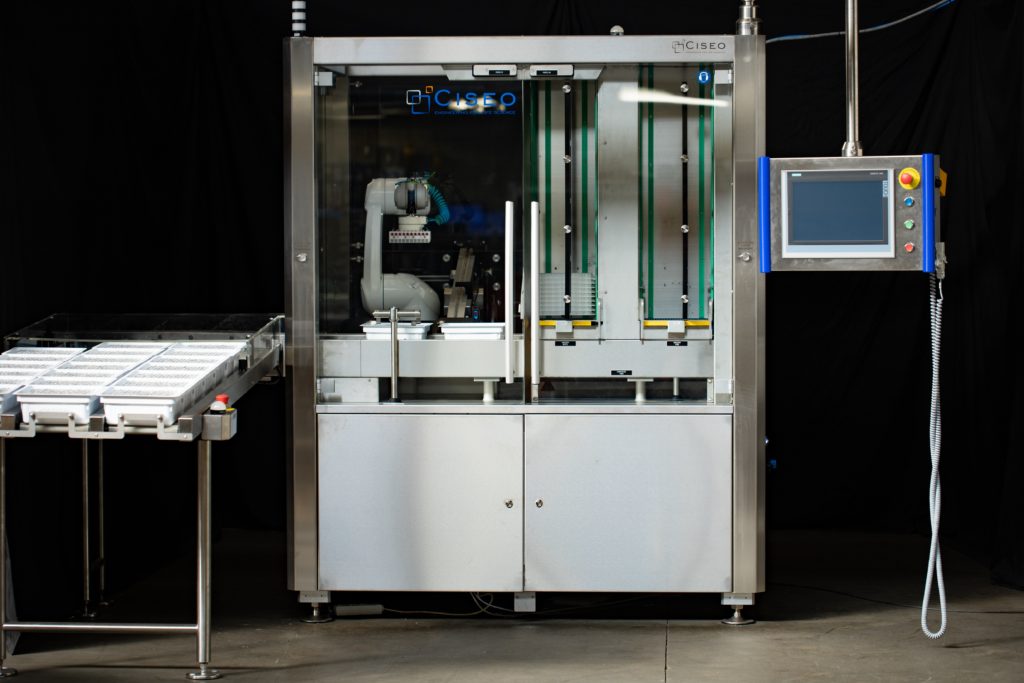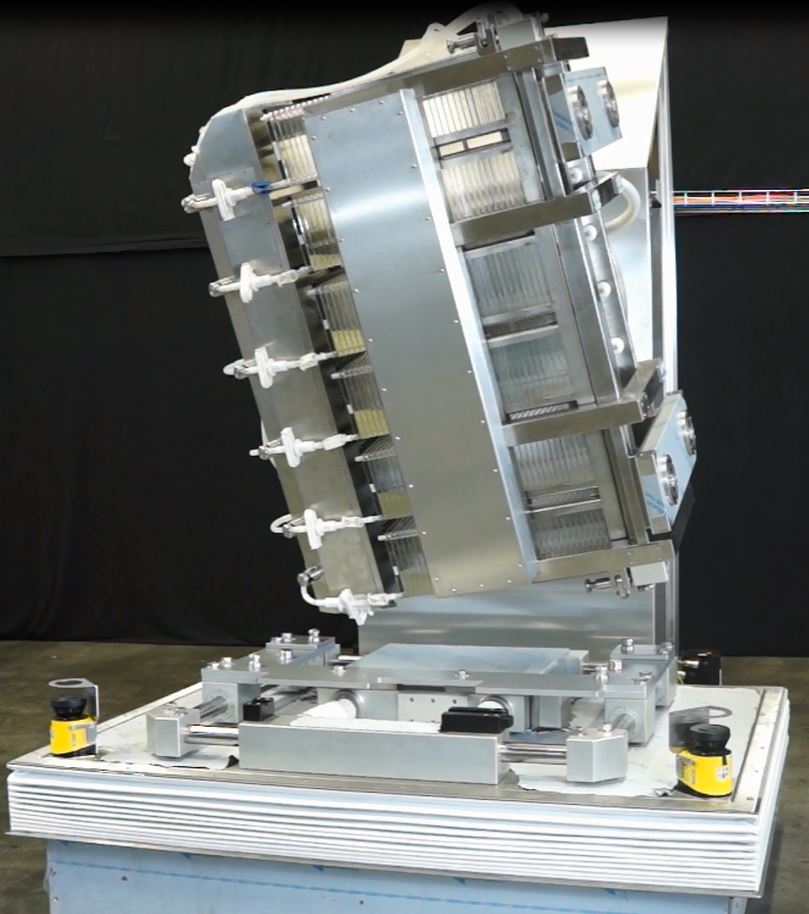


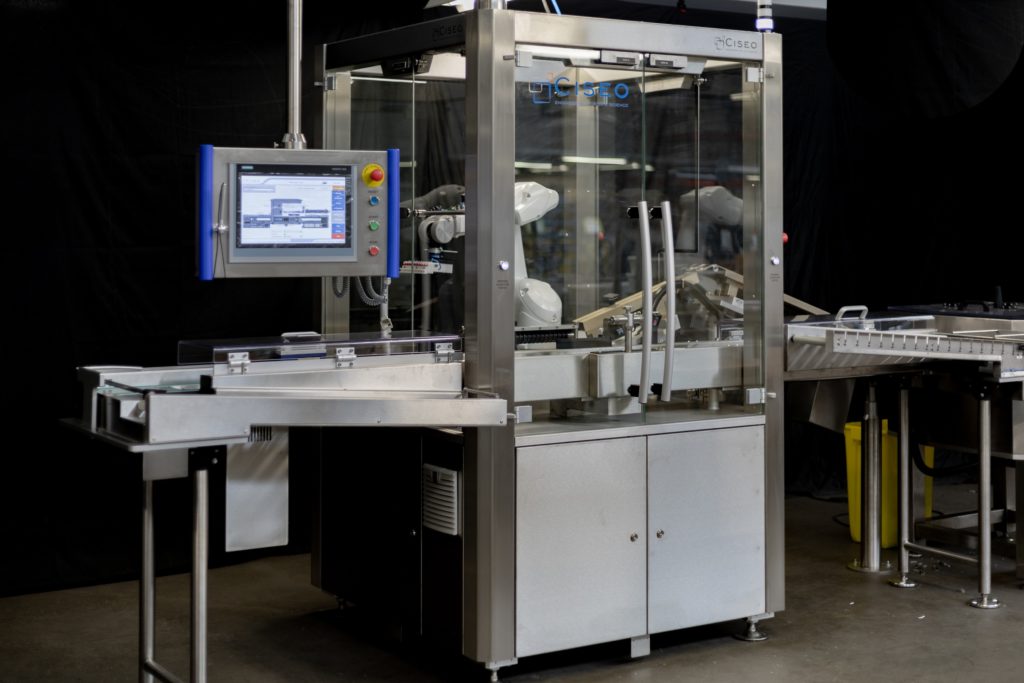
Final filtration & PUPSIT
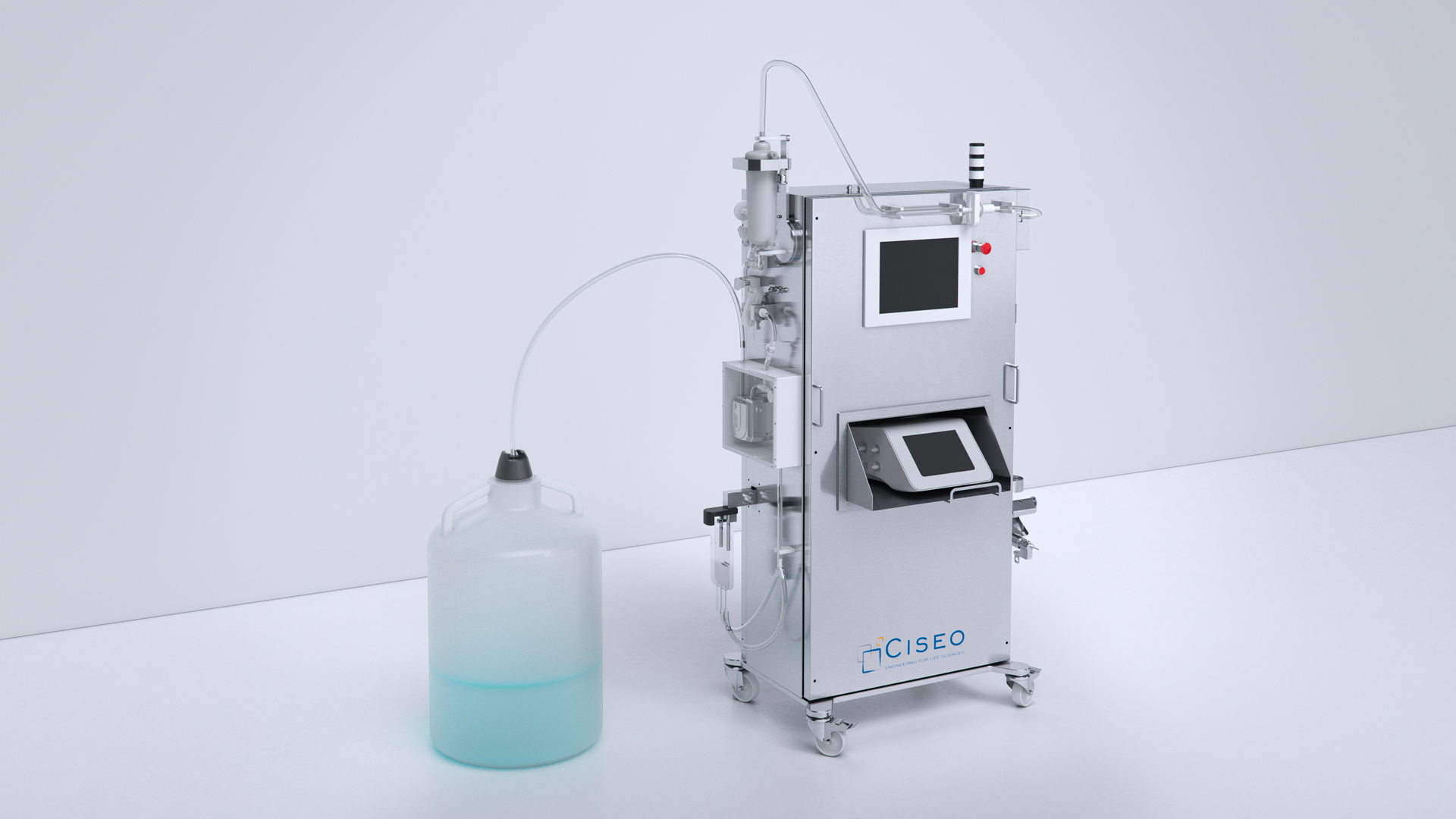
Final filtration system with single or double filter integrating the PUPSIT (Pre-Use, Post Sterilization Integrity Test) with single use systems.
Cilyx expertise
Automation of Single-Use Systems Sterilizing filtration of vaccines and parenteral drugs before filling is a crucial step in pharmaceutical good manufacturing practices. To ensure this step is carried out under the safest conditions, the automated final filtration system offers advanced features: filter integrity testing before and after production (PUPSIT – Pre-Use, Post-Sterilization Integrity Testing), sterility assurance, and data integrity. Automated Filtration and Adaptability Our automated filtration system (AFS) simplifies the transfer and final filtration of your products by seamlessly integrating with your single-use systems, linking the finished product tank and the filler. Thanks to its high flexibility, the AFS is compatible with most common filter integrity testing equipment and a wide range of market sterilizing filters, such as Pall, Sartorius, and other brands. Data Integrity and Reporting The automated filtration system meets the rigorous requirements of the pharmaceutical industry: it ensures the transfer of production data (batch reports and audit trails) to the plant’s SCADA/MES system. Compactness and Flexibility
Our approach
Sterile filtration of vaccines and parenteral drugs before the filling step is an important requirement in terms of good manufacturing practices in the pharmaceutical sector. You want to make sure that it is carried out under the safest conditions: filter-integrity tests before and after production, sterility assurance and production data integrity are at the heart of the features of our automated AFS V2021 final filtration system.
AFS 2021 automates the transfer and final filtration of your products by adapting to your single-use systems that connect the finished product vessel and your filling equipment. The highly adaptable AFS interfaces with the most common filter-integrity testing equipment and the vast majority of sterile filters on the market.
Benefits
The automated AFS V2021 filtration system perfectly satisfies the needs of the pharmaceutical industries: feedback from production data (batch reports and audit trails) to the customer's SCADA, compactness, flexibility in the configuration of the single-use assemblies used.
Your filtration system is CE-certified and satisfies all the requirements related to cGMP and GAMP5 good manufacturing practices.
Further information
The AFS is distinguished by its compactness, allowing smooth integration into often restricted production spaces. Its compact design optimizes space utilization while maintaining high operational efficiency. This compactness is paired with flexibility, facilitating the configuration of single-use assemblies to meet specific production needs. Compliance and Certification Certified CE, the AFS fully adheres to cGMP and GAMP5 good manufacturing practices, ensuring complete compliance with industry quality and safety standards.
Advantages
- <strong>Compliance with GMP Annex 1</strong> – Ensures full adherence to good manufacturing practices specific to sterilizing filtration, guaranteeing the quality and safety of pharmaceutical products.
- <strong>Adapted to Different Filter Sizes</strong> – Designed to accommodate various filter formats, providing flexibility to meet specific filtration requirements for different types of products.
- <strong>Compatibility with Multiple Brands</strong> – Operates with a wide range of sterilizing filter brands, such as Pall and Sartorius, allowing for easy integration with existing equipment.
- <strong>Flow Regulation and Monitoring</strong> – Incorporates advanced flow regulation and monitoring systems, ensuring precise control and optimal management of the filtration process.
- <strong>Requires Minimal Floor Space</strong> – Its compact design allows for installation in restricted production areas, optimizing space utilization and facilitating integration into existing production lines.
Do you need help?
See our frequently asked questions to find the answer, or contact us.
Artificial intelligence (AI) can offer several significant advantages in a production workshop. Here are some of the key benefits that AI can bring to a manufacturing environment:
- Process optimization :
- AI can analyze large amounts of data in real time to identify patterns, trends and inefficiencies in production processes.
- It can help optimize production parameters to improve efficiency and reduce costs.
- Predictive maintenance :
- By using sensors and monitoring systems, AI can predict potential equipment failures before they occur.
- This enables proactive maintenance planning, reducing unplanned downtime.
- Quality control :
- AI systems, including computer vision, can inspect and evaluate product quality in real time.
- This helps to minimize defects and maintain high quality standards.
- Adaptability and flexibility :
- AI can help automate production processes, allowing greater adaptability to changes in demand and more flexible production.
- Data driven decision making :
- AI can quickly process complex data to support decision-making.
- Predictive analytics and machine learning models can help optimize operational decisions.
- Reducing labour costs :
- AI-based automation can replace some manual tasks, reducing labor costs and allowing workers to focus on more complex tasks.
- Improving safety
- AI systems can monitor working conditions and prevent hazardous situations, helping to improve worker safety.
- Continuous innovation:
- AI encourages continuous innovation by enabling companies to explore new approaches and develop smarter solutions for production challenges.
However, it is important to note that successful implementation of AI in a production shop requires careful planning, adequate training of staff and effective integration with existing processes. Companies must also consider the ethical and social implications of automating and using AI in the workplace.
Managing a robotics project, especially when it’s the first time for a company, can be complex but crucial to ensure implementation success. Here are some tips to help manage such a project:
- Needs Assessment :
- Clearly identify the tasks or processes that the robot must perform.
- Analyze the expected benefits in terms of productivity, quality and profitability.
- training and awareness :
- Train staff on the use of the robot and explain the benefits of this technology.
- Involve the teams that will be directly affected by the robot in the process.
- Selecting the right robot:
- Choose a robot adapted to your company’s specific needs in terms of payload, speed, precision, etc.
- Also consider the safety and compatibility aspects with other equipment.
- Development of a detailed project plan :
- Identify the project milestones, timelines and responsibilities of each team member.
- Allow room for contingencies.
- Resource management:
- Allocate the necessary resources, including staff, time and budget.
- Make sure the team has the technical skills to manage and maintain the robot.
- Testing and validation:
- Perform thorough testing before commissioning to identify and correct any problems.
- Involve end users in the validation process to gather their feedback.
- Safety :
- Prioritize the safety of staff by implementing adequate security measures.
- Comply with current security standards and ensure that all personnel are trained in security protocols.
- Continuous communication :
- Communicate regularly with stakeholders throughout the project.
- Be transparent about progress, challenges and solutions.
- Maintenance and support :
- Develop a preventive maintenance plan to ensure that the robot is running smoothly.
- Make sure you have access to technical support in case of problems.
- Post-implementation evaluation:
- Evaluate the results after commissioning the robot.
- Identify lessons learned and use this information to improve future projects.
By following these tips, you will increase your chances of success in implementing your first robotics project. Cilyx can assist you in this process.
The combination of artificial vision and adaptive robotics represents real progress in various fields and offers several advantages. Here are some key aspects of these technologies and the benefits they bring:
- Flexibility and Adaptability :
- Adaptive robotics allow robots to adjust to changing environments and interact flexibly with their surroundings.
- Combined with artificial vision, robotics can recognize and react to unexpected objects and situations, improving the adaptability of automated systems.
- Reduction of Programming Time :
- Artificial vision can be used to teach robots specific tasks by simply showing visual examples rather than resorting to complex manual programming.
- This reduces programming time and enables faster commissioning of robotic systems.
- Improvement of Precision and Quality :
- Artificial vision allows advanced visual perception, allowing robots to perform tasks with high precision.
- This improves the quality of automated operations, especially in areas such as assembly, welding and inspection.
- Human-Robot interaction more Intuitive :
- By using artificial vision, robots can detect and react to human movements and actions, facilitating more natural interaction with human operators.
- This paves the way for safer and more efficient collaborative work environments.
- Adaptation to Product Variations:
- The combination of vision and adaptive robotics allows systems to adapt to product variations without requiring extensive reprogramming.
- This is especially beneficial in manufacturing environments where frequent product changes are common.
- Predictive maintenance :
- Vision systems can be used to monitor the condition of components and equipment.
- Adaptive robotics can respond to this data by anticipating maintenance needs, helping to reduce unplanned downtime.
- Reduction of Labour Costs:
- By automating complex tasks with advanced vision and adaptive robotics, companies can reduce labor costs and improve operational efficiency.
While these advances are promising, it is essential to consider potential challenges such as safety, ethics, staff training and change management when adopting these technologies. Successful implementation requires thorough planning and careful integration into existing processes. Cilyx can assist you in this process.
Ask for an analysis of your needs
Discover how our solutions can be tailored to your situation. Contact our experts to analyse your process and define the most relevant approach.